Julius Franklin Collins was one of the young men of the lost generation of World War One. He was killed on 30 September 1918 in Argonne, France, and was newly married and 30 years old at the time of his death.
When he completed his registration card for the draft on 5 June 1917, he was single, lived at 4217 Cook Avenue, St. Louis, Missouri, and owned a gift and art shop. He was described as tall, slight of build with brown eyes and black hair. Early the next year he married Edith Audrey Wolff, also of St. Louis.
Before Julius left to fight for the American Expeditionary Forces in Europe, he wrote A Soldier's Creed, which was published in several newspapers, including Julius' hometown paper, the Troy Call.
 |
| As published in the Troy Call on 12 July 1918 |
The 56th Infantry Regiment was organized in mid June 1917 at Fort Oglethorpe, Georgia and attached to 3rd Brigade, 7th Infantry Division in World War One. The brigade's infantry and reconnaissance elements were involved with skirmishes with German troops but the division never participated as a whole in any engagements during the war. However, once such "skirmish," which took place on 30 September 1918, was fatal for Julius Franklin Collins.
On 1 November 1918, the story of his death was front page news in the Troy Call:
JULIUS COLLINS DEAD
Reported Killed in Action in France on September 30
Is First Troy Boy to Lose Life on Battlefield "Over There"
Relatives and friends in Troy were shocked and grieved Wednesday upon learning that Julius Collins, a former Troy boy, had lost his life in action in France on Monday, September 30th. He is the first Troy boy to be killed in action in the present war.
The information was received here by John Collins, a brother, from the dead soldier boy's wife who is residing in St. Louis. No further particulars, aside from the usual announcement by the War Department are known but it is hoped these will be received by letter from his superior officer or from some member of his company.
Young Collins went into the army on May 12th in St. Louis and was sent to Camp McArthur at Waco, Texas, for training. He sailed for France on August 1st and was in that country just two months. The last letter received from him by relatives here was written on September 8th.
Julius Collins was the son of the late Mr. and Mrs. William Collins and was born in Troy on August 1, 1888. His mother, whose maiden name was McMakin, died when he was an infant and his father was killed in a mine accident a year ago last July. After receiving a common school education, he went to work and and for a number of years was employed in the office of John Small, a prominent contractor, but for the past several years he had conducted ...[illegible]... Chicago are uncles and Mrs. Clementine Collins of Collinsville his step-mother.
Julius was a young man of exemplary character and habits and was admired by all who knew him. He was an energetic and capable young man and as such was successful in his undertakings. He was the author of "A Soldier Boy's Creed," an outline of nine points for guidance of soldier boys, which was published in The Call in its issue of July 12th. The creed was inspired by thinking over why he was in the army and the part he was to play in the present world undertaking. He admitted that the thoughts outlined had helped him and he had them printed on cards for distribution to other soldier boys in the hope that they would help them, too."
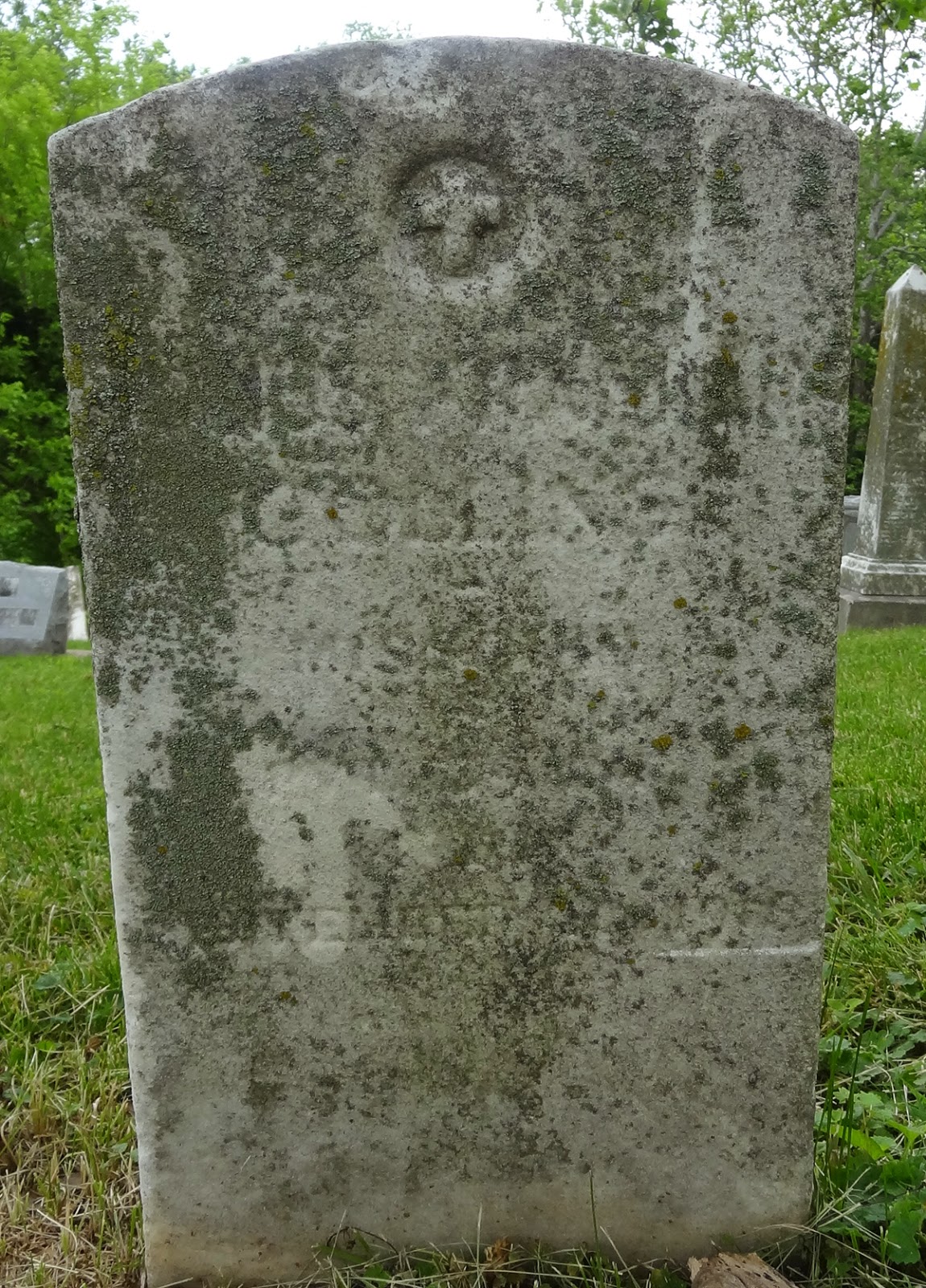 |
| Julius Franklin Collin's headstone; courtesy of Findagrave.com member DianaR |
Julius Franklin Collins was buried in the Troy City Cemetery.
This is my entry for Amy Johnson Crow's 52 ancestors in 52 weeks challenge.
_________________
I have written about Julius and his Creed before but have learned more details about his life since then. Thanks to a contact made as a result of this blog with one of his brother John's descendants.
Julius Franklin Collins was born on 1 August 1888 in Troy, Illinois, to William and Ida May (McMakin) Collins. His father had immigrated to the U.S. from England with his parents as a young boy. His mother died when he was an infant. He married Edith Audrey Wolff on 28 February 1918 and joined the Army on 12 May 1918. He shipped to France with his unit on 1 August 1918 and was killed in France on 30 September 1918. Julius Franklin Collins was the step-son of my great great grandmother Clementine (Wells) Riggin Collins.
More posts about my ancestors who fought in World War One


